

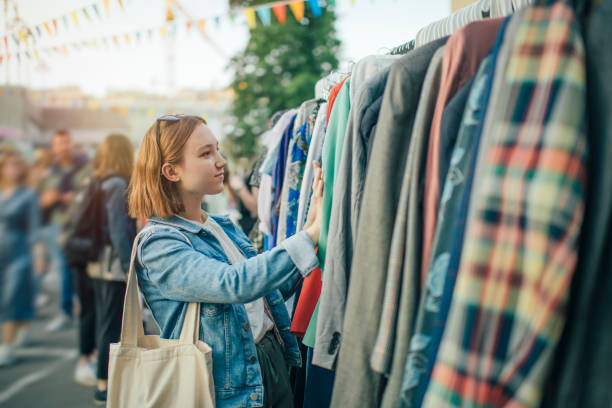
The clothing business is evolving. Nowadays, people seek cheaper garments and better ways to reduce waste. As a consequence, the trade in second-hand clothing between nations has become a major enterprise, connecting suppliers, distributors, retailers and purchasers around the world.
Every year, millions of worn clothing items are traded in international markets. They offer these garments to new people, helping keep textiles out of the trash and creating jobs. As demand for eco-friendly clothing surges, it is more crucial than ever to understand how the global second-hand clothing trade operates.
What’s the global second-hand clothing trade?
In the worldwide second-hand clothing trade, people buy, sort, process, and sell used items across different nations. Clothes that can still be worn are kept from going to waste and sold in a number of ways.
Usually, these things arise from:
- Used clothes collection campaigns
- Proponents of
- Locations that recycle
- Trash Receptacles Contributions from Customers
Once collected, the clothing is sent down a supply line to stores, consumers and wholesale buyers.
It offers garments a second life and lets businesses make money from stuff that would otherwise be thrown out.
How to collect used clothes
The process begins with gathering the garments. Many organizations accept worn clothing at donation centers, in neighborhood drives, and at collecting bins.
There are several motives for giving clothes. Some people desire to sell their houses. Some help with humanitarian efforts. A lot of people also want to have less of an impact on the environment.
Then the clothing is taken to sorting stations, where it is examined and processed.
Why Sorting and Grading Matter
Sorting is one of the most crucial procedures in the secondhand garments industry.
Workers inspect each piece of clothing and sort it according to:
- Quality
- Condition
- Type
- Brand
- Season
- Market demand
Things that obtain high marks are usually really good. These could be brand-name stuff, vintage clothes or anything that is still in good shape.
Cheaper items could be sold for less money or sent to textile recycling groups.
When it is properly graded, distributors and stores can be sure of exactly what they are getting.
What is wholesale distribution?
The clothing is sorted, rolled up and sold in bulk to individuals who buy in bulk.
Big clothing stores buy a lot of clothes and then sell them to:
- department stores,
- Webshops
- Exporting companies
- Market sellers
This step is a key element of the global second-hand clothing trade, with many businesses buying and selling second-hand clothes at this stage.
It is also excellent for sellers because they can get goods at very low prices and make a lot of money.
International Markets, Trade and Export
There are several countries in the foreign market for worn garments. Clothes are often collected in one place and shipped to another where they are badly needed.
How do people receive clothes? Well, sometimes it is through inexpensive fashion, in which old garments are taken to emerging countries.
Also, exporters produce jobs throughout the supply chain, such as:
- Collection services
- Sorting facilities
- Warehousing
- Transportation
- Retail operations
The growth in global demand and the continued expansion of international trade are helping many places enjoy economic prosperity.
Why do people buy secondhand clothes?
There are several reasons customers want secondhand clothes.
Affordability
Many people prefer buying secondhand clothing because it is cheaper than new. This means consumers can get excellent garments without paying a lot of money.
Sustainability
Fashion trash is a growing consciousness. Buying clothes second-hand reduces demand for new manufacturing and encourages buyers to shop more sustainably.
Unique Fashion Choices
Many second-hand stores are selling antique and unique stuff that you don’t often find in stores. This is how customers typically discover unique styles and stuff.
Environmental Benefits of the Industry
There are several ways the global used-clothes market benefits the planet.
- This is the first step toward getting rid of textile waste. Rather than being thrown away, millions of garments are reused.
- Second, garments are more durable, so they don’t need to be replaced as often. This helps prevent things like water, electricity, and raw materials from running out.
- Third, fewer clothes in landfills mean less stress on them.
These benefits have turned many environmentalists into advocates for the expansion of secondhand clothing stores worldwide.
Challenges Facing the Industry
There are many nice things about the business, but there are some terrible things as well.
- One issue is ensuring consistent item quality. Buyers require reliable grading procedures to ensure they are receiving the correct inventory.
- Another challenge, changing the rules. Some countries do not allow worn-out clothes into their countries, and trade could be affected.
- Transport and shipping costs may also affect the profitability of wholesalers and exporters.
Even with these challenges, there is a thriving used clothing market in many regions. Trade and tech in the future
Technology is transforming the used-clothes business.
Businesses are now using digital tools to:
- Managing inventory
- Follow your package
- Speak to customers
- Manage orders
- Review the sales statistics
Now people from all around the world can buy products in online markets. Now, tiny firms can easily sell products to consumers in other parts of the world.
As technology improves, the supply chain should become more efficient.
Final Words
The global second-hand clothing trade is a significant element of the contemporary fashion business. It provides affordable clothing to millions of people worldwide, creates jobs, and encourages green practices.
The complete operation, from collection and sorting to wholesale distribution and retail sales, is designed to prolong the life of precious objects. As the world grows increasingly concerned about the environment, the secondhand clothing market will likely play an even bigger role in fashion in the future.
Team Up With A1 Liberty for Quality Wholesale Apparel
Looking for a trustworthy partner in the used clothing business? A1 Liberty is dedicated to providing excellent wholesale used apparel, dependable sourcing, and competitive prices to help your business thrive. Get in touch with A1 Liberty today to learn more about wholesale options and expand your inventory with confidence.
Frequently Asked Questions
1. What is the global second-hand clothing trade?
It is the buying, selling, and distribution of second-hand clothes worldwide.
2. Where do second-hand garments come from?
They often come from donations, collection bins and recycling initiatives.
3. Why do people like to buy second-hand clothes?
It’s economical, eco-friendly and often has one-of-a-kind fashion finds.
4. How to sort second-hand clothes?
These are graded by quality, condition, type, and demand.
5. Is the second-hand clothes market expanding?
Yes, demand continues to grow as more shoppers opt for sustainable clothes.